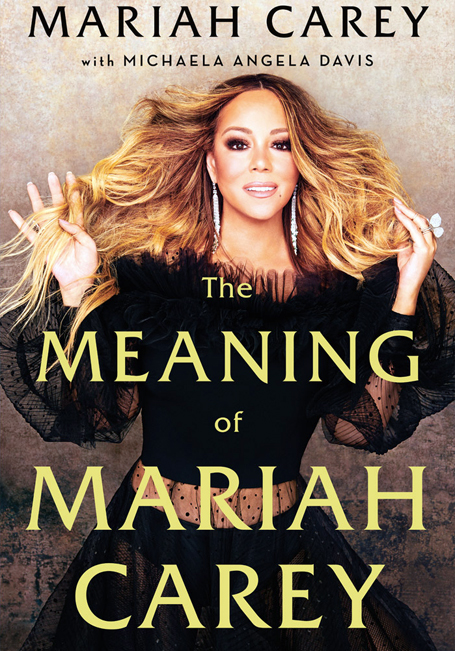
Mariah Carey must face accusations that she defamed her brother in her best-selling memoir, a New York judge ruled Tuesday (February 15), saying the singer could potentially face liability over claims about cocaine and prison time.
Though the judge dismissed allegations over numerous other passages in the book, she ruled that Morgan Carey could continue to sue his sister for defamation over two sections in which she claimed he had sold drugs and had "been in the system".
"Although Carey maintains that the phrase 'sometimes drug dealing' is a 'rhetorical epithet', in light of the earlier statement that plaintiff had supplied clubgoers with 'powdered party favors', the average reader could understand this phrase to mean that plaintiff had committed a serious crime," Justice Barbara Jaffe wrote in her decision.
The judge did reject all of Morgan's claims against the memoir's publisher, ruling that his "vague and conclusory allegations" about his sister's demeanor were not enough to show that Macmillan Publishing Group had a reason to suspect that Mariah's claims were false.
"Evidence that Carey was a difficult person does not demonstrate that publisher defendants entertained or should have entertained doubts about the veracity of her statements at the time of publication," Justice Jaffe wrote.
An attorney Morgan said he was "pleased" that the judge allowed the claims to proceed. An attorney for Mariah did not immediately return requests for comment. A lawyer for MacMillan declined to comment.
Morgan Carey filed the case in March 2021 over "malicious falsehoods" contained in the pages of The Meaning of Mariah Carey, the singer's 2020 memoir that topped the New York Times Best Seller list. He claimed that many passages in the book were "invasive and painful", and caused "serious damage to his reputation".
The lawsuit took aim at eight separate passages in the book, including one in which she described a "vicious fight between my father and brother", and another in which she said Morgan had "sketchy contacts in the music industry".
In Tuesday's ruling, Justice Jaffe said those statements, and several others, were not the kind of claims that could form the basis of a defamation lawsuit. For instance, the judge said the term "sketchy" was Mariah's opinion, not a statement of fact that could be proven false.
But the judge refused to dismiss Morgan's claims about the passages dealing with drugs and prison. In one, Mariah said that Morgan had "discreetly supplied the beautiful people with their powdered party favors".
"It implies, if not outright alleging, that he was supplying an illegal controlled substance to 'the beautiful people' who were part of the 1980s party scene, thereby alleging that plaintiff committed serious crimes," Justice Jaffe wrote.
The ruling ordered Morgan to refile a new complaint against just Mariah, focusing solely on the two potentially defamatory passages. Once refiled, the case will proceed toward a trial on just those allegations.
(Billboard)
|
|